
金枝欲孽2
US president’s order to scale back military exercises with S.Korea signals intention to ease tension on Korean Peninsula, return to ‘direct diplomacy’ with Pyongyang: experts_我的网站

一 |
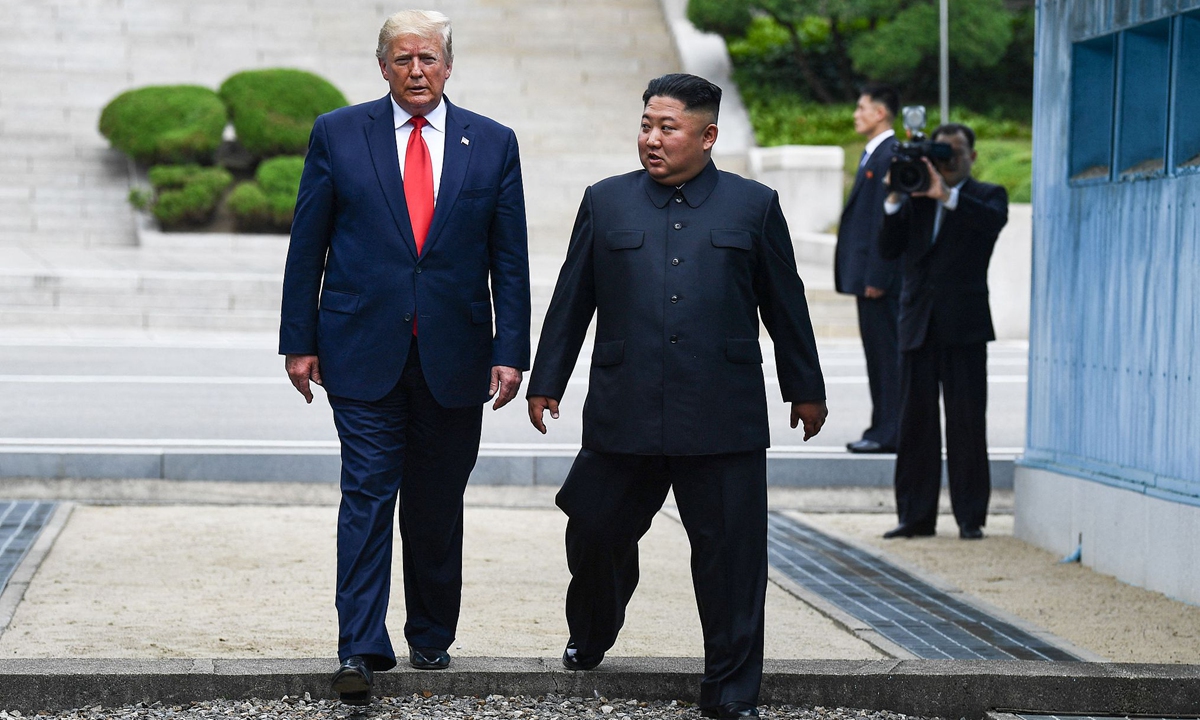
Just hours before a military exercise between the US and South Korea due to get underway on Monday, US President Donald Trump announced that Washington would reduce military exercises with key regional ally Seoul, citing his positive relationship with the North Korean leader and South Korea's lack of assistance with Iran, CNN reported.
Chinese experts see Trump's sudden decision to scale back military drills with South Korea as a signal of his intention to ease tensions on the Korean Peninsula and possibly return to direct diplomacy with Pyongyang. However, they warned that a carrot-and-stick approach may not work with Pyongyang, which has already seen Washington renege on its commitments. If Trump sincerely seeks peace on the peninsula, returning to the negotiating table with a genuine willingness to engage should be the first step.
Writing on Truth Social on Sunday, Trump said "based on my very good relationship with Kim Jong Un, of North Korea, I am not happy with the fact that the United States has, long ago, agreed to participate in Joint Military Exercises with South Korea."
"These exercises are not only costly, with much of these costs paid for by the United States of America (as usual!), but send a signal that is totally inappropriate and hostile, to a Country that, as long as Donald J. Trump has been President, has been unthreatening and respectful," wrote the US president, noting that since it was too late to cancel the exercises entirely, he had asked Defense Secretary Pete Hegseth to "substantially reduce" US participation.
The 11-day exercise, known as Ulchi Freedom Shield, was expected to involve about 18,000 South Korean troops. According to the US military, South Korean and US forces planned to conduct live-fire drills to test precision-strike and maneuver capabilities under complex operational scenarios, as well as river-crossing operations and the deployment of pre-positioned military supplies, South Korea's Chosun Ilbo reported.
Trump also reiterated his request for South Korea to help with the US war against Iran. "While somewhat unrelated, I recently asked the President of South Korea if they would like to join us in the Denuclearization of the Islamic Republic of Iran, and they said, 'No thanks!'" Trump wrote.
At a press conference of China's Foreign Ministry on Monday, a reporter also raised Trump's claim that he would scale back joint military exercises with South Korea, citing the high cost of the drills and his good relationship with North Korean leader, and asked how China would support the resumption of dialogue between the US and North Korea. Chinese Foreign Ministry spokesperson Lin Jian responded, "we have noted the relevant reports. Maintaining peace and stability on the Korean Peninsula and advancing the political settlement of the Korean Peninsula issue serve the common interests of all parties."
South Korean media Yonhap News Agency reported that Trump's instruction came as the situation on the Korean Peninsula remained tense again. The media noted that Trump's move can be seen as a conciliatory gesture toward the North Korea, after the White House repeatedly affirmed that Trump remains open to dialogue with Pyongyang "without any preconditions."
Trump has long sought to ease tensions on the Korean Peninsula, but his first-term diplomatic efforts produced few substantive results. The decision to scale back military exercises with South Korea may therefore signal an intention to send goodwill and return to direct diplomacy with North Korea, an unfinished piece of business from his first term, Song Zhongping, another Chinese military affairs expert, told the Global Times.
Long-standing tensions between the US and North Korea are a major source of instability on the Korean Peninsula, Lü Chao, an expert on East Asian studies at the Liaoning Academy of Social Sciences, told the Global Times, noting that the fundamental way to address these tensions is for the two sides to return to the negotiating table and resolve their differences through peaceful dialogue, rather than escalating tensions through displays of military force.
On August 13, a spokesperson for the Foreign Ministry of the Democratic People's Republic of Korea responded to the scheduled military drills between South Korea and the US. The spokesperson said that "it is our consistent principle of ensuring security to respond to a new level of a threat with a new level of a deterrent. DPRK remains steadfast in its will to frustrate outsiders' hostile acts with the most powerful and overwhelming force and absolutely defend the supreme interests of the state security," according to official Korean Central News Agency (KCNA).
On Saturday, Trump shared a photo of himself with Kim Jong Un, the top leader of the DPRK on Truth Social, and wrote that he and the North Korean leader "get along GREAT!"
During Trump's first presidential term, he and Kim first met in Singapore in June 2018, marking the first-ever US-DPRK summit. They met again in Hanoi, Vietnam in February 2019, and later that June in the inter-Korean border village of Panmunjom, according to Xinhua News Agency.
North Korea's past dealings with the US, particularly the breakdown of bilateral negotiations without substantial progress, have eroded Pyongyang's trust in Washington, Lü said.
Therefore, if Trump genuinely wants to leverage his relationship with the North Korean leader to address tensions on the Korean Peninsula, emphasizing their personal ties alone will not be enough. Washington will need to demonstrate genuine sincerity and back its words with concrete action, according to the expert.
。
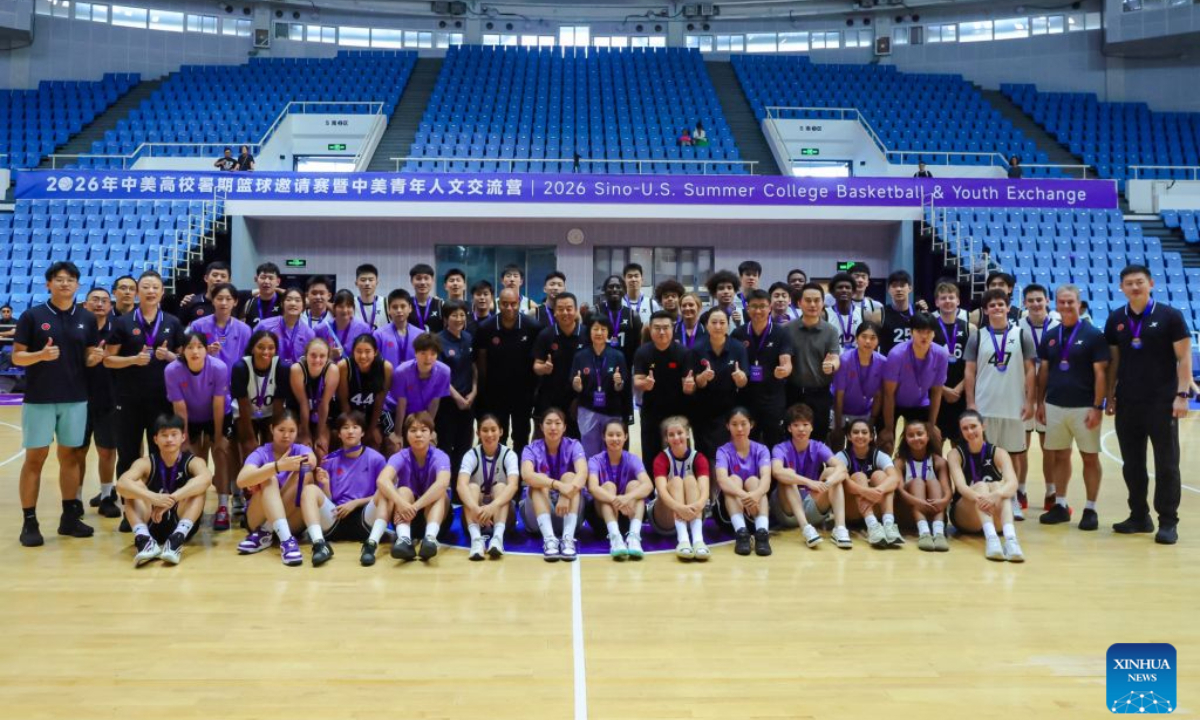
On the basketball court, young players from the two countries came together as teammates, rather than competitors.
The basketball games, held at Tsinghua University's sports complex in Beijing over the weekend, featured 16 U.S. players teaming up with their Chinese peers in separate men's and women's games, with players from both countries mixed on each team.
The games were a highlight of the 2026 Sino-U.S. Summer College Basketball & Youth Exchange, a six-day program that brought together U.S. students from universities including Stanford University, Harvard University and Yale University.
Co-hosted by China Center for International People-to-People Exchange (CCIPE) under the Ministry of Education and Tsinghua University, the program combines basketball competitions with activities including campus tours and cultural experiences to deepen exchanges, cultivate sportsmanship, and promote communication, understanding, friendship, and cooperation among younger generations on both sides.
"I'm so excited," said Lily Brown, a 20-year-old student from Bates College, after her team won. "Everyone had really good hustle, and everyone was attacking the basket really well and shooting with confidence."
After training with her Chinese teammates for several days, Brown said that despite the language barrier, they shared much in common, from movies and entertainment to social media.
"We communicate through basketball," she added.
That shared language is at the heart of the program's mixed-team format, according to J.R. Carnegie-Hargreaves, the U.S. delegation's team leader.
"The shared pursuit of basketball creates a common ground, and from that, mutual trust and friendship take root," he said.
The idea of using sports to bring people together has a long history in China-U.S. relations. In 1971, a U.S. table tennis team made a historic trip to China, marking the reopening of channels for friendly people-to-people exchanges between the two countries.
This April, Chinese and American young people gathered for events marking the 55th anniversary of Ping-Pong Diplomacy.
Today, young people are increasingly seen as vital bridges in bilateral relations. Deputy Director-General of the CCIPE Cao Diefeng said at the opening ceremony that the program was designed to help young people from both countries not only get to know each other on the court but also step into each other's thoughts and daily lives.
"Through firsthand experiences of the development story, cultural heritage and social landscape of each other's countries, they may come to see each other in a truer, fuller and more vivid light," he added.
China launched an initiative in November 2023 to invite 50,000 young Americans to visit the country for exchange and educational programs over five years. According to China's Ministry of Foreign Affairs, more than 50,000 young Americans have since visited China, reaching the target two and a half years ahead of schedule.
For many young Americans, the chance to explore China is an experience in itself. Jason Singleton, an 18-year-old student from Harvard University, said that he felt "blessed" to join the exchange program. It was his first trip to China after studying Chinese for about six years.
"Not everybody in America gets the chance to see the Great Wall," he said, delighted to get immersed in the Chinese culture during the journey.
For Cuyler Sparks, a high school student at Choate Rosemary Hall, the chance to learn more about Chinese basketball while exploring the country was one she couldn't "say no" to.
On her first trip to China, time spent with her Chinese teammates has been just as memorable, especially trying local foods. Roast duck quickly became her favorite dish.
"We don't know what some of the things are, so they explain to us how to eat them and what's really good," she said. "Just being together and trying to figure things out, even with the language barrier, has been really fun."
For some participants, the exchange was more than just a first encounter; it was a chance to continue a friendship that had already begun.
Xi Taicheng, a senior student from Tsinghua University who joined the event two years ago, was glad to meet some familiar faces again this time.
"Playing alongside the U.S. players was always a refreshing experience," he said. During several days of joint training, they chatted about their studies, training and the Chinese Basketball Association (CBA), with the Americans curious about life and basketball in China.
"I've made more new friends this time and added almost all the players on the U.S. men's team on social media," Xi said. "It's been really fun chatting and spending time together."
。
Current article:http://niujingkongkengjuezan.buzz/crtjosi/sc8me.html
Published on:10:08:13
 Vicky Kaushal and Katrina Kaif Mark Four Years of Marriage With a Heartfelt Anniversary Post
 供应商上门讨要货款,发现上海总部人去楼空?知名平台回应:不良商户寻衅滋事,散播谣言!_码头_碧波
 摩托罗拉Moto P40/Z4 Play Shell渲染曝光:前者使用穿孔屏幕
 CES 2019,无处不在的谷歌语音助手
 微软Edge移动团队招聘软件工程师:中国北京办公区
 南票区税务局 服务专班为虹螺岘干豆腐产业注入“税动力”