
第五元素
코빗 이어 코인원도 ‘수수료 0원’ 승부수…업비트·빗썸 아성 흔들까_我的网站

一 |
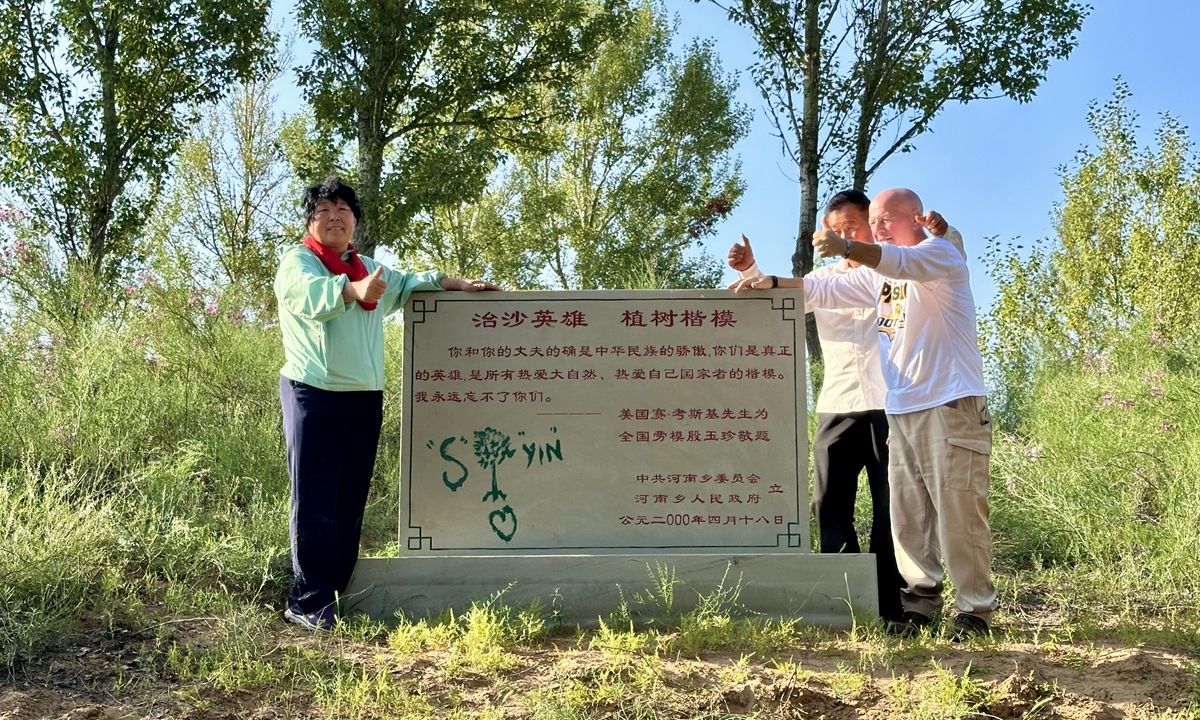
At the Ordos Ejin Horo International Airport in Ordos, North China’s Inner Mongolia Autonomous Region, Yin Yuzhen, a nationally recognized hero in desertification prevention and control and her US friend “Sai Kaosi” (whose real name is Ronald Sakolsky) embraced each other in tears.
This reunion after 26 years, spanning the Pacific Ocean, took place as scheduled under the witness of the lush greenery of the Maowusu Desert, touching the hearts of countless people around the world.
This reunion across mountains and seas was not only a long-awaited gathering of two old friends, but also a vivid testament to how goodwill can take root, how people can work together in desertification control, and how people to people friendship can endure.
This reunion was a beautiful echo of goodwill transcending time.
Twenty-seven years ago, Sakolsky, who was teaching in China, was deeply moved by the story of rural woman Yin’s efforts to combat desertification and curb the spread of sand. He selflessly donated $5,000 to support her efforts and traveled specially to the Maowusu Desert in Wushen Banner the following spring to visit and encourage her.
Yin kept this assistance firmly in her heart and repaid it by planting trees. As seasons came and went, 50,000 saplings, together with precious goodwill and trust, took root in the Maowusu Desert and grew into towering trees.
Yin’s repayment was not a return of material wealth, but the transformation of a profound goodwill that crossed national borders into patches of greenery deep in the desert through her day-after-day sweat and perseverance.
This reunion highlighted the tremendous power of people planting trees together until forests grow.
Yin’s life is a history of struggle against wind and sand. At the age of 19, she married into the Maowusu Desert, where wind and sand blocked her door overnight. The rural woman made the solemn vow, “I would rather die from exhaustion planting trees than let the sand overwhelm me.” She fought scorching heat and drought, battled strong winds and raging sand, and worked tirelessly for decades, eventually turning more than 70,000 mu (4 666.67 hectares) of desert into an oasis.
Sakolsky extended a helping hand and provided strong support because he was deeply moved by Yin’s desertification control efforts. Two ordinary people joined hands in tree planting and desert control because of their shared aspiration for greenery.
Countless ordinary people like them, carrying enthusiasm, keeping their feet on the ground and devoting themselves wholeheartedly, have gathered the great strength of many people planting trees until forests emerge, transforming landscapes and creating miracles in the world.
This reunion demonstrated the enduring contemporary value of people-to-people exchanges. A faded group photo, more than 20 years of never forgetting, a nationwide effort to search for someone, and a journey across the ocean to meet again – the friendship between Yin and Sakolsky is rooted in the recognition and respect between ordinary people, simple yet deeply moving. Friendship, which derives from close contact between the people, holds the key to sound state-to-state relations.
People from different countries have different cultural backgrounds, but they share the same love for the planet we call home, the same aspiration for lucid waters and lush mountains, the same pursuit of a better life, the same appreciation for every bit of goodwill, and the same cherishing of sincere friendship. Just as Yin carefully tended the saplings planted in the desert, nurturing this bond of affinity and understanding among people with sincerity will enable it to grow ever stronger and more resilient despite winds and sands.
This reunion provided a vivid example of “jointly building a community of life for man and nature.” For humanity to achieve better survival and development, it must carry out desertification prevention and control. Through a lifetime of arduous efforts, Yin brought about a green transformation in a corner of the Maowusu Desert, serving as a microcosm of China’s desertification prevention and control efforts.
As one of the countries most severely affected by desertification in the world, China has continued its efforts in desertification control for more than half a century, achieving a historic transformation from “sand advances, people retreat” to “green advances, sand retreats” with both desertified land and sandy land areas continuously decreasing.
As a foreign friend, Sakolsky, driven by the simple belief that “humanity has only one Earth, which is our common home, and we should all cherish it,” resolutely supported Yin’s desertification control efforts. Through his actions, he has shown us that protecting the ecological environment is a common cause of all humanity – by working together and supporting each other, humanity will surely be able to leave a clean and beautiful world for future generations.
Deep in the Maowusu Desert, plants and trees remain silent, yet they represent the most touching language through which humanity and nature, and humanity and the world, communicate with each other. This place is not only a shining answer sheet for China’s ecological civilization development, but also a warm example for global desertification control through extensive international exchanges and cooperation in jointly creating more greenery.
From $5,000 to 50,000 towering trees, from a landscape once covered by wind and sand to vast stretches of lush green, from the other side of the Pacific Ocean to the depths of the Maowusu Desert, the reunion between Yin and Sakolsky inspires us that goodwill can transcend mountains and seas, perseverance can transform deserts, and mutual understanding between hearts can eliminate prejudice and barriers.
Living together in the global village, if people from all countries show more sincere empathy, work together with one heart, stay grounded and move toward each other, they will surely be able to jointly protect the common home on which we depend for survival and cultivate more green shade of friendship and hope.
This was compiled and translated by the Global Times English edition based on an article published in the quick comment on economic hotspots column of the People's Daily on August 24, 2026.
。 코인원·코빗, 수수료 전면 무료…핵심 수익원 내주고 고객몰이업비트·빗썸 거래량 97% 장악…중위권 거래소 점유율 반격 26일 코인원은 이날 오전 11시부터 별도 공지 시까지 전 종목 거래 수수료율을 0%로 전환한다고 밝혔다. /코인원[마이데일리 = 정수미 기자] 가상자산 거래소들의 수수료 경쟁이 다시 불붙고 있다. 코빗에 이어 코인원까지 전 종목 거래 수수료를 없애면서 업비트·빗썸 중심의 시장 구도를 흔들기 위한 중위권 거래소들의 고객 유치전이 거세지는 모습이다. 26일 코인원은 이날 오전 11시부터 별도 공지 시까지 전 종목 거래 수수료율을 0%로 전환한다고 밝혔다. 이용자는 코인원 웹이나 애플리케이션(앱)에서 바우처를 발급받으면 30일간 전 종목을 수수료 없이 거래할 수 있다. 바우처는 자격이나 횟수 제한 없이 재발급할 수 있어 사실상 무료 거래를 이어갈 수 있다. 앞서 코빗을 운영하는 디지털엑스도 지난 24일부터 수수료 무료 정책을 시행했다. 내년 8월 24일까지 1년간 원화마켓 전 종목의 거래 수수료를 받지 않는다. 업비트와 빗썸은 원화마켓 일반 주문에 각각 0.05%, 0.04%(쿠폰 적용 시)의 거래 수수료를 적용하고 있다. 고팍스의 원화마켓 거래 수수료율은 0.2%다. 중위권 거래소들이 잇따라 핵심 수익원인 수수료를 포기한 것은 업비트와 빗썸에 크게 뒤처진 시장 점유율을 끌어올리기 위한 승부수로 풀이된다. 공정거래위원회 제출 자료에 따르면 지난해 거래량 기준 국내 가상자산 거래소 시장점유율은 업비트가 약 69%, 빗썸이 28%로 양사가 97%가량을 차지했다. 반면 코인원은 2%, 코빗은 0.5%에 그쳤다. 실제 수수료 무료화는 단기간 거래량을 끌어올리는 효과를 보이고 있다. 가상자산 정보 제공업체 코인게코에 따르면 무료 정책 시행 전 0.2%대까지 떨어졌던 코빗의 거래대금 점유율은 시행 이후 한때 1%에 근접한 수준까지 상승했다. 다만 거래 수수료가 거래소의 핵심 수익원인 만큼 무료 경쟁이 장기화할 경우 수익성 부담으로 이어질 수 있다는 우려도 나온다. 수수료를 앞세워 단기간 거래량을 늘리더라도 무료 혜택이 끝난 뒤 이용자를 붙잡을 수 있을지가 관건이다.。
Current article:http://niujingkongkengjuezan.buzz/list_0pu3n/kbg.html
Published on:01:24:51
 电锯惊魂
电锯惊魂 80s
80s