对话
100 days to APEC: Shenzhen's green choices applauded_我的网站

A |
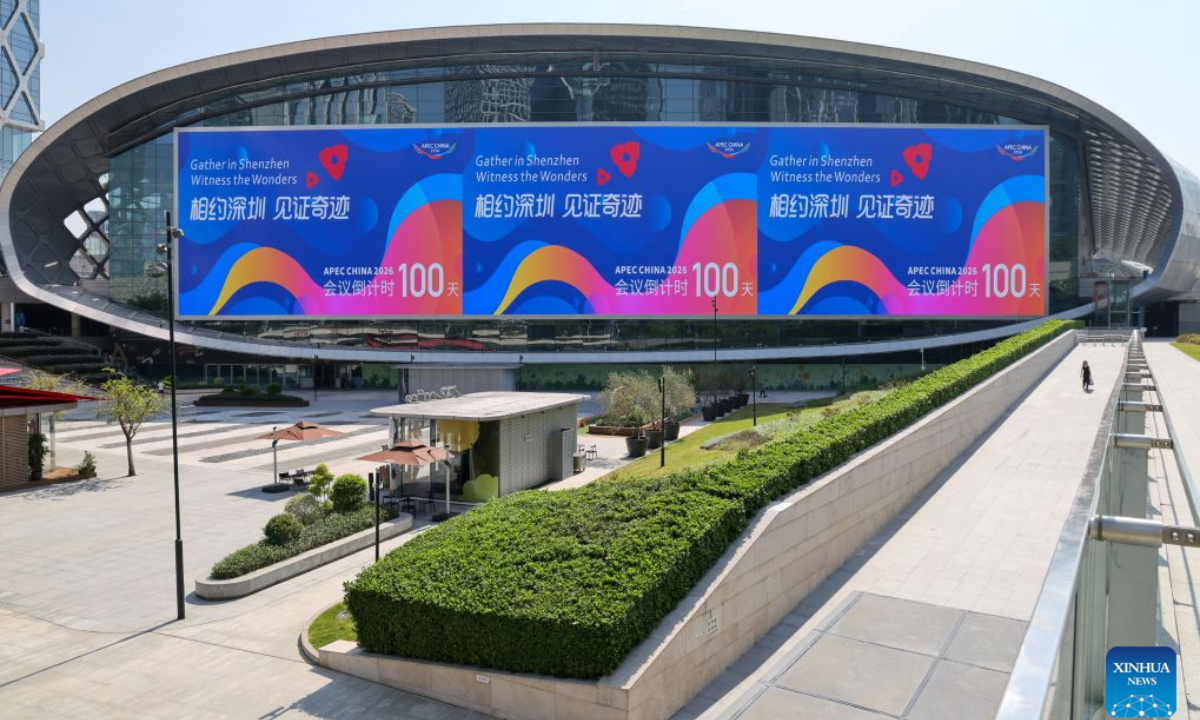
This photo taken on Aug. 10, 2026 shows a view of the Shenzhen Bay Sports Center, with a bulletin board indicating the 100-day countdown to the 33rd Asia-Pacific Economic Cooperation (APEC) Economic Leaders' Meeting, in Shenzhen, south China's Guangdong Province. With themed bulletin boards, outdoor posts, decorations and installations, Shenzhen marked on Monday the 100-day countdown to the 33rd Asia-Pacific Economic Cooperation (APEC) Economic Leaders' Meeting. (Xinhua/Liang Xu)Decades ago, Shenzhen made an unusual planning choice to protect the mangroves in the city's Futian District, shifting a planned coastal road 260 meters north.
The move was meant to protect the original mangrove forest, according to Bao Daming, Secretary-General of the International Mangrove Center (IMC) Secretariat located in Shenzhen. For Bao, the decision reflects the southern Chinese megacity's approach to balancing urban development with ecological conservation.
That approach was on display during the 2026 APEC Ministerial Meeting on Forestry held in Shenzhen recently. Representatives from 21 economies discussed sustainable forest management, mangrove and blue carbon conservation, urban biodiversity, smart ecological governance and legal forest-products trade. They signed a joint statement setting out directions for deeper regional cooperation.
On Monday, Shenzhen marked the 100-day countdown to the 2026 APEC Economic Leaders' Meeting, bringing renewed attention to the host city's ecological practices. As Shenzhen moves toward the meeting, its ecological practices are also being shared and discussed among Asia-Pacific economies.
The city is opening sites involving mangrove protection, river restoration and ecological corridors to visiting forestry officials and technical teams from APEC economies. It is also working through the IMC on joint research into cross-border mangrove restoration and the development of blue carbon standards.
Shenzhen has built a citywide ecological network connecting mountain forests, rivers and coastal wetlands. More than 20 ecological corridors, including the Kunpeng Trail, have helped reconnect fragmented urban habitats, where leopard cats and Eurasian otters have returned. More than 6,870 species have been recorded across the city, including 208 species of nationally protected plants and animals.
In Shenzhen's central urban area, the Futian mangrove nature reserve demonstrates the balance being pursued between the needs of the city and nature. It is a key stopover for migratory birds along the East Asian-Australasian Flyway. There, an AI-enabled smart protection system helps safeguard tens of thousands of migratory birds.
Eduardo Pedrosa, executive director of the APEC Secretariat, said Shenzhen's approach to combining urban development with mangrove conservation could serve as a reference for cities across the Asia-Pacific.
"It's interesting to see how Shenzhen has really developed over the last 20 years," he said. "What we've seen is a lot of towers, skyscrapers, urban development, but it's also a lot of greenery ... of course you have the protected mangrove area as well."
Use of technology is another part of Shenzhen's approach.
Camila Isabel Zepeda Lizama, head of the International Affairs Unit at Mexico's Ministry of Environment and Natural Resources, said she was particularly interested in China's use of information technology, robotics and artificial intelligence to identify suitable sites and support ecological restoration.
"We're very interested in cooperating with China, particularly on mangrove restoration," she said.
Lizama also saw room for cooperation in forest monitoring and blue carbon sequestration, noting the importance of mangroves in climate adaptation and carbon sequestration.
Beyond wetlands, Shenzhen is also pursuing green industrial transformation, developing its digital-energy sector and advancing citywide park development. More than 90 percent of the 310 rivers under monitoring have good or excellent water quality, while technological innovation is being used to support ecological restoration.
A white paper released in Chinese and English on Aug. 3 brought many of these practices together. Titled "A City of Symbiosis: The Shenzhen Practice of Harmonious Coexistence between Humanity and Nature," it outlines four pathways for urban ecological governance and presents 19 representative cases.
Bao said the center plans to share Shenzhen's experience in balancing urban development and ecological protection with its members worldwide.
The road shifted away from Futian's mangroves was one choice made by one city. Yet the discussions in Shenzhen show that balancing urban development with ecological protection, and exploring how technology can support that effort, is a concern shared across the Asia-Pacific region.
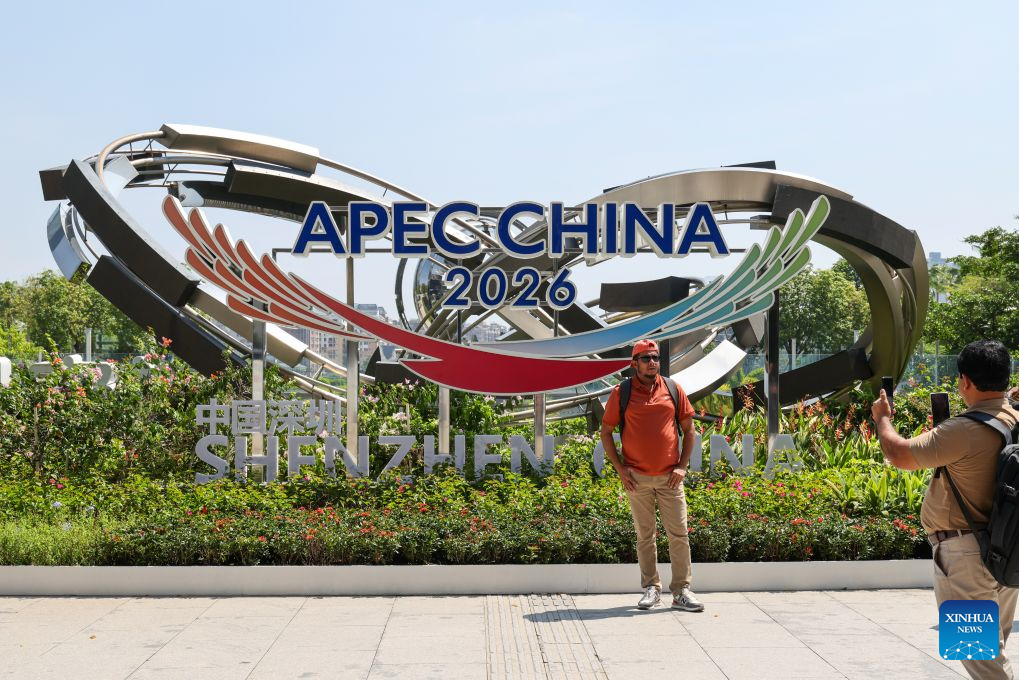
A foreign tourist poses for photos with a themed installation at the east square of the Shenzhen North Railway Station in Shenzhen, south China's Guangdong Province, Aug. 10, 2026. With themed bulletin boards, outdoor posts, decorations and installations, Shenzhen marked on Monday the 100-day countdown to the 33rd Asia-Pacific Economic Cooperation (APEC) Economic Leaders' Meeting. (Xinhua/Liang Xu)
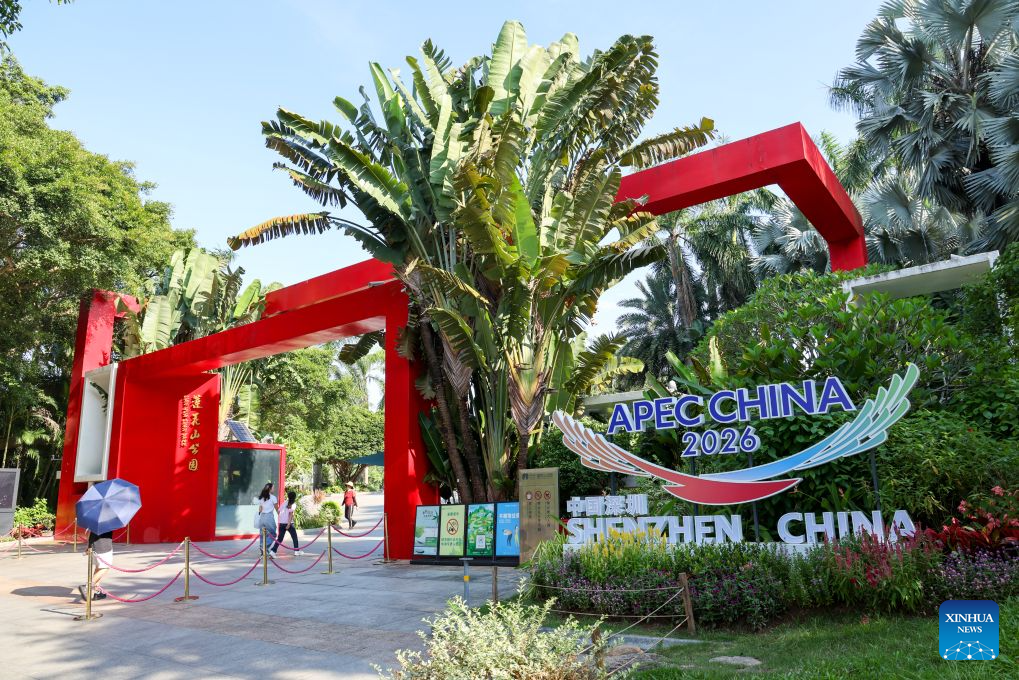
A themed installation is pictured at Lianhuashan Park in Shenzhen, south China's Guangdong Province, Aug. 10, 2026. With themed bulletin boards, outdoor posts, decorations and installations, Shenzhen marked on Monday the 100-day countdown to the 33rd Asia-Pacific Economic Cooperation (APEC) Economic Leaders' Meeting. (Xinhua/Liang Xu)
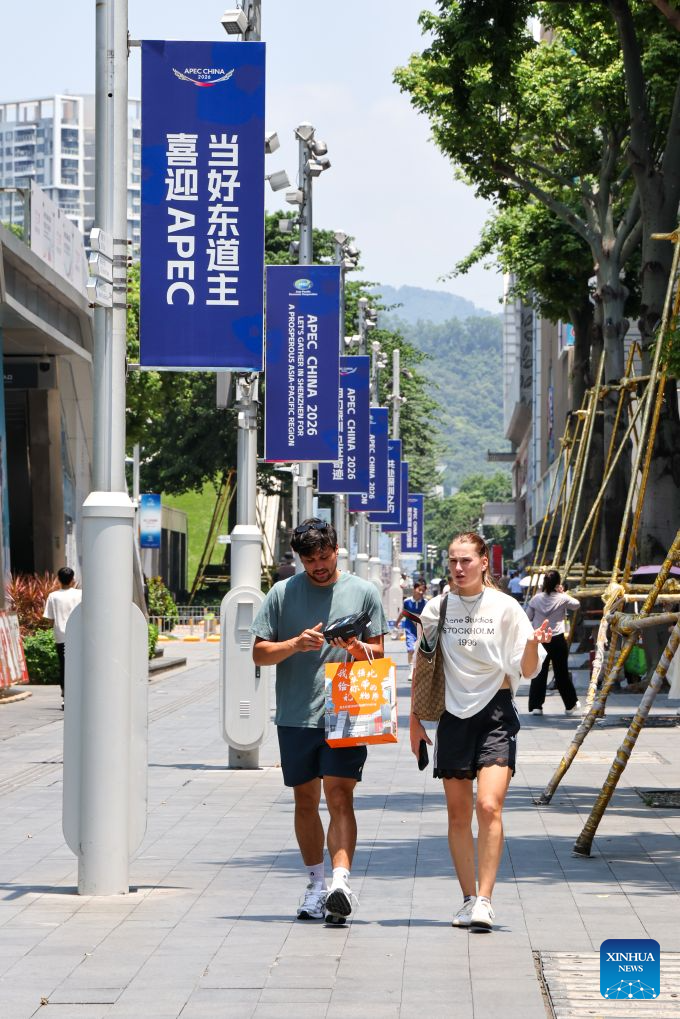
Foreign tourists walk past themed banners on a street in Huaqiangbei of Shenzhen, south China's Guangdong Province, Aug. 10, 2026. With themed bulletin boards, outdoor posts, decorations and installations, Shenzhen marked on Monday the 100-day countdown to the 33rd Asia-Pacific Economic Cooperation (APEC) Economic Leaders' Meeting. (Xinhua/Liang Xu)
。
原标题:“红星何以照耀中国”网络国际传播活动在京启动9月12日,由中央网信办网络传播局主办,新华网承办的“红星何以照耀中国”网络国际传播活动启动仪式在北京举行。中央网信办副主任、国家网信办副主任牛一兵,人民日报社、新华社负责同志出席活动并致辞。“红星何以照耀中国”网络国际传播活动邀请外籍嘉宾讲述新时代中国共产党的故事,展现国际社会对党的二十大和中国未来发展的关注和期待。中国埃德加·斯诺研究中心主任孙华表示,“向世界说明真实的中国,让世界把目光投向中国——85年前斯诺做到了,今天我们更有必要做到向世界说明新时代中国的和平发展,使更多友好的目光投向中国,使更多的人了解真实的中国。

B | ”中国日报社美籍专家、“新斯诺工作室”成员聂子瑞(Erik Nilsson)随后分享了新时代的“新斯诺”们向世界讲述真实中国故事的感受。

C | 他说:“讲述中国故事不只是我的一项工作,更是终生的使命。”外文出版社荣誉英文主编大卫·弗格森(David W. Ferguson)分享了自己参与翻译《习近平谈治国理政》的感悟和收获,通过准确传神的翻译介绍,让世界更好认识新时代的中国。澳大利亚籍时政评论员杰瑞·格雷(Jerry Grey)讲述了他采访的一位自治州少数民族女州长的故事,选贤任能的制度优势令中国共产党获得14亿人民的支持。太和智库高级研究员艾纳·唐恩(Einar Tangen)则通过考察基层政府“一站式”服务,观察到中国共产党坚持改革创新,坚持解决老百姓的问题,必将继续取得成功,保有人民的信任与信心。来自格鲁吉亚的桃漫(Tamar Kvlividze)分享了过去一年作为“网红博主”,通过拍摄短视频,用新的角度了解中国,记录中国的经历。哥伦比亚籍时政评论员高飞(Fernando Muñoz Bernal)通过分享新冠肺炎疫情发生以来,他和哥伦比亚家人的故事,表达了他对“动态清零”总方针、对“人民至上 生命至上”的理解和认同,“活着,还有对幸福的追求,就是我们在中国享有的人权”。中央广播电视总台埃及籍记者王慕林(Abdelaziz Ahmed)介绍了他采访的中国脱贫攻坚、乡村振兴、生态保护的成功案例,中国经验、中国方案不仅是中国之幸,也将造福世界。厦门大学管理学院美籍专家潘维廉(William N. Brown)教授说:“中国提供了另一种选择:即通过共建‘一带一路’,共同落实‘全球发展倡议’和‘全球安全倡议’,促进世界和平与发展,推动构建人类命运共同体。”“红星何以照耀中国”网络国际传播活动得到了中国互联网发展基金会的支持。活动启动后,人民网、新华网、央视网、中国网、国际在线、中国日报网、光明网、中国新闻网、环球网、海外网等中央新闻网站将陆续推出对全球政要、知名人士、海外网友、专家智库和华人华侨的采访报道。返回搜狐,查看更多责任编辑:
。

D |
Current article:http://niujingkongkengjuezan.buzz/list_su3u/aptvk.html
Published on:19:05:31


